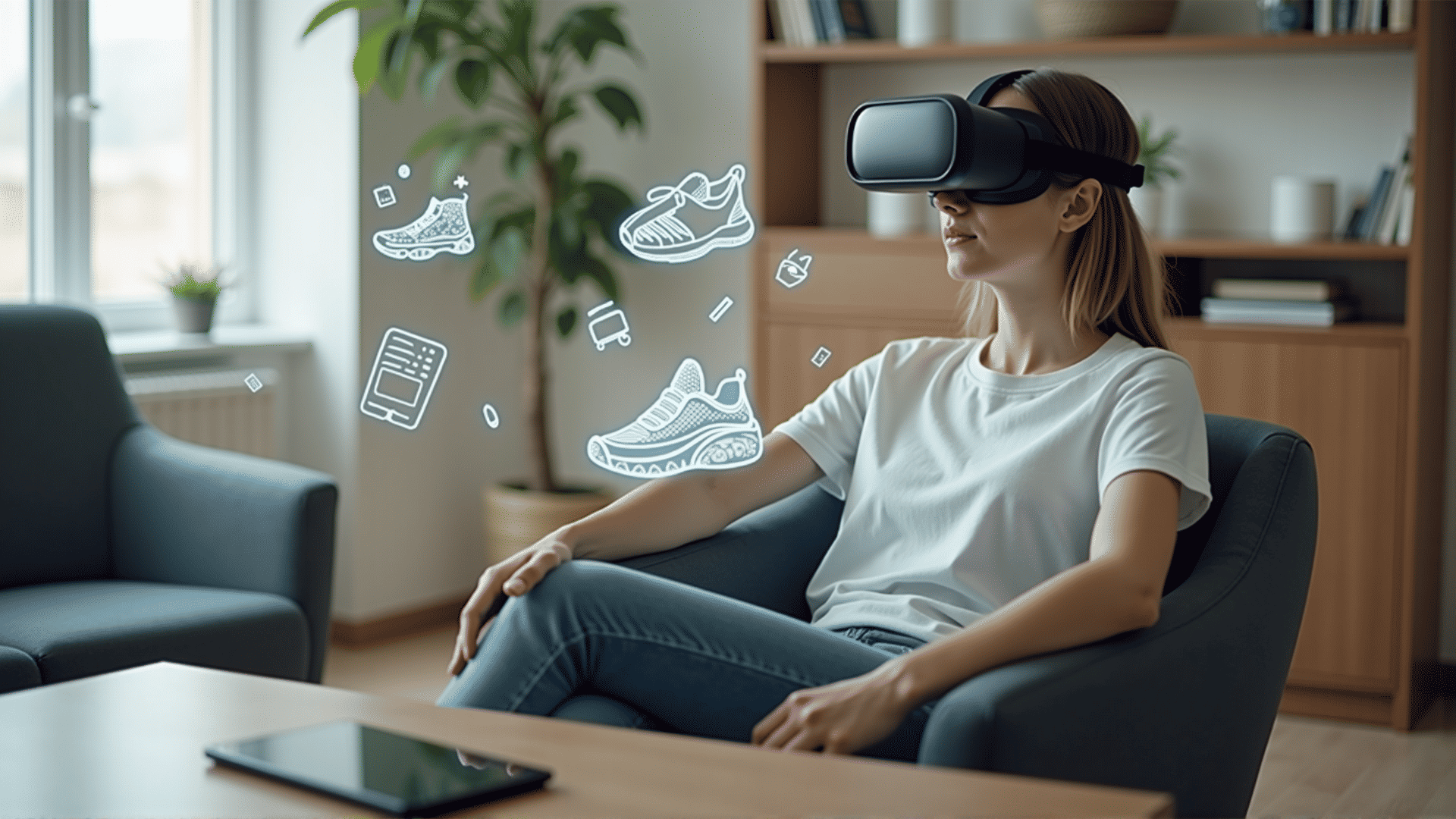
The landscape of e-commerce has been continuously evolving, and one of the most significant technological advancements reshaping this industry is augmented reality (AR). This innovative technology is revolutionizing the way consumers interact with products online, offering new and immersive experiences that were once reserved for physical retail environments.
Augmented reality blends digital elements into the real world, allowing customers to visualize products in their own spaces or interact with them in virtual settings. This technology addresses a key challenge in e-commerce: the inability to physically interact with products before purchase. By bridging this gap, AR enhances customers' buying confidence and reduces the uncertainty that often accompanies online shopping.
One of the most noteworthy applications of AR in e-commerce is virtual try-ons. This feature has become particularly popular in the fashion and beauty industries, where consumers can "try on" clothes, accessories, or makeup without leaving their homes. By using their smartphone cameras, customers can see how a pair of glasses fits their face or explore different shades of lipstick in real time. This not only enhances user engagement but also minimizes the number of returns, which is a significant cost factor for many retailers.
Home decor and furniture companies have also embraced AR to help customers visualize how items will look in their own homes. Through AR apps, shoppers can virtually place furniture in their living space, ensuring that it fits aesthetically and dimensionally. This ability to see a 3D representation of the product in a real-world environment provides consumers with a clearer understanding of what they’re buying, leading to more informed purchasing decisions.
Moreover, AR is opening doors to personalized shopping experiences. Retailers are using AR to provide interactive and customized experiences for each user. For instance, skin care brands use AR to analyze a person's skin tone and suggest tailored products. Not only does this personalized approach enhance customer satisfaction, but it also encourages brand loyalty as customers feel their individual needs and preferences are being acknowledged.
Retailers are also experimenting with AR to boost engagement through gamification. By incorporating game-like elements and challenges into the shopping experience, businesses can make the process more enjoyable and interactive, drawing in more potential customers. Some companies have introduced AR treasure hunts in physical stores or online platforms, creating a novel experience that combines entertainment with shopping.
As technology continues to advance, AR capabilities are becoming more sophisticated. The integration of artificial intelligence with AR is enhancing the accuracy and efficiency of these applications, providing consumers with increasingly realistic and dynamic experiences. AI-driven AR tools can better understand consumer preferences and behaviors, enabling retailers to offer real-time, contextually relevant suggestions and advertisements.
Despite its numerous advantages, the widespread adoption of AR in e-commerce is not without challenges. Businesses must invest in developing high-quality AR content and ensure that their digital infrastructure can support these resource-intensive technologies. Moreover, ensuring seamless integration between AR applications and existing e-commerce platforms is critical to delivering a smooth user experience.
In conclusion, augmented reality is redefining the boundaries of e-commerce, offering new ways for consumers to explore, interact with, and purchase products. As AR technology continues to evolve, it promises to further transform the e-commerce landscape, providing retailers with powerful tools to enhance customer engagement and satisfaction. For businesses, embracing AR presents an opportunity to differentiate themselves in a competitive market by offering unique, personalized, and innovative shopping experiences.